
The History of One Plant, Two Traditions: New Mexico’s Green and Red Chile
In New Mexico, chile isn’t just food — it’s part of who we are. Every fall, the smell of roasting green chile fills the air from Chimayó to Hatch, uniting us in tradition and pride. But not all green chile tastes the same, and that’s what makes our state so special. The soil, the sun, and even the water that feeds our fields shape the flavor, heat, and texture of the chile we love. Northern Chile, like that from Chimayó or Dixon, carries a deep, smoky flavor — bold and earthy, grown in cooler mountain valleys. Southern Chile, from Hatch or the Mesilla Valley, is bright, smooth, and full-bodied, grown under long days of desert sun.
I’m teaching the difference because understanding our Chile means understanding New Mexico itself — our land, our families, and our traditions. Whether you prefer the rustic fire of the north or the mellow heat of the south, all green chile is good. It’s part of our shared heritage. And no matter where you live, the chile you roast and store for winter connects you to generations before us who did the same — keeping New Mexico’s heart burning warm and green.
.png)
The Story of New Mexico Green Chile: North to South
1. Ancient Roots — The Arrival of Chile to New Mexico
Chile peppers are not native to North America — they originated in Central and South America over 6,000 years ago. Spanish colonists first brought chile seeds to what was then known as Nuevo México in the late 1500s. Indigenous communities, including Pueblo, Navajo, and Apache peoples, began cultivating and adapting chile into their agricultural cycles, integrating it into local diets and ceremonies.
By the 1600s, green chile was being grown along the Rio Grande corridor — from the northern pueblos near Ohkay Owingeh (San Juan Pueblo) and Taos, down through Santa Fe and Albuquerque, all the way to Mesilla and the fertile valleys near Las Cruces.
2. The Northern Chile — Bold, Rustic, and Earthy
Northern New Mexico chile, especially grown in places like Chimayó, Dixon, Española, and Alcalde, is famous for its intense, earthy flavor and complex heat.
-
🌱 Soil and Climate: The soil in the north is more mineral-rich and less sandy than in the south. It’s fed by mountain runoff and ancient acequia systems — irrigation ditches that carry cold, mineralized water from the Sangre de Cristo Mountains.
-
☀️ Growing Season: The growing season is shorter, with cooler nights and fewer frost-free days. This slower growth creates chiles with thicker flesh and a deeper, smokier taste.
-
🌶️ Flavor Profile: Northern chile is often described as “spicy with character.” It’s not always the hottest, but it has layers — smoky, nutty, and slightly sweet.
The Chimayó Chile is legendary — so much so that it has its own seed preservation efforts. It’s typically smaller and more irregular in shape than southern varieties but prized for its unique flavor.
3. The Southern Chile — Bright, Fruity, and Iconic
In the south, Hatch, Las Cruces, and the Mesilla Valley dominate chile production — and these are the chiles most known across the world as “New Mexico Green Chile.”
-
🌾 Soil and Sun: The southern region has sandy loam soil, with high drainage and abundant sunshine. The Rio Grande basin provides warm, fertile conditions perfect for large-scale cultivation.
-
☀️ Growing Season: Southern New Mexico enjoys a longer and hotter season, producing chiles that are larger, smoother, and slightly milder (though some varieties pack serious heat).
-
🌶️ Flavor Profile: Hatch and southern chiles tend to be brighter and more vegetal, with a “green” taste that’s crisp and clean — excellent for roasting. The heat is often balanced, allowing the sweetness of the pepper to shine through.
The Hatch Chile has become so famous that the name itself is now trademarked for chiles grown in the Hatch Valley. However, the “true Hatch flavor” depends heavily on the soil and the specific strain of seeds — like Sandia, Big Jim, Joe E. Parker, or NuMex 6-4 developed by New Mexico State University.
4. Does the Soil Make the Difference?
Absolutely.
The flavor and heat of green chile depend on three main factors:
-
Soil Composition – The minerals, pH level, and drainage of the soil impact the chile’s nutrient uptake. Northern soil, being clay-heavy and mountain-fed, produces bolder, smokier flavors. Southern soil, being sandy and sun-soaked, yields smoother, cleaner-tasting chile.
-
Elevation & Climate – Northern chile grows at higher elevations with cooler nights, which concentrates flavor but slows growth. Southern chile grows faster under intense heat, which develops sweetness and fruitier notes.
-
Seed Variety & Water Source – Acequia-fed chiles in the north absorb trace minerals from ancient mountain streams; southern chiles irrigated from the Rio Grande and wells have different mineral balances, affecting taste and capsaicin (heat) levels.
5. North vs. South — No Right Answer
Ultimately, both regions produce true New Mexican green chile — but they reflect the land and culture of their region:
-
Northern chile tastes like mountain life — hearty, smoky, and soulful.
-
Southern chile tastes like sunshine — smooth, bright, and lively.
That’s why locals proudly ask:
“Red or green?” — but those who know the land smile and say:
“Christmas — both.”

.png)
🌶️ The Story of New Mexico’s Red Chile: From Green to Red🌶️
1. From Green to Red — The Natural Transformation
Every red chile in New Mexico begins its life as a green chile.
As the summer sun ripens the pods, the chile peppers gradually change color — from bright green to deep crimson red. This process is called maturation, and it happens when the plant stops producing chlorophyll (which gives it the green color) and the sugars and natural oils begin to concentrate.
When the chile turns red, its flavor becomes richer, sweeter, and more complex, and its skin thickens and dries naturally under the New Mexico sun.
2. The Tradition of Drying and Ristras
Once harvested, the red chiles are often strung together into ristras — the beautiful hanging strings of red peppers that decorate homes, doorways, and markets throughout the state.
This tradition began centuries ago with Spanish settlers and Pueblo farmers who discovered that drying chiles preserved them through the winter. The sun-dried pods could later be crushed or soaked to make red chile sauce, ensuring a year-round supply of flavor and warmth.
The ristra became both a symbol of abundance and protection — believed to bring good health and blessings to the home.
3. The Taste of Time
Red chile has a completely different flavor profile than its green counterpart.
-
Green chile is fresh, sharp, and bright.
-
Red chile is deep, smoky, and earthy, often with subtle sweetness.
Drying concentrates the chile’s natural sugars and oils, transforming it into a more aromatic spice. When rehydrated and blended into sauce, red chile delivers a smooth heat that lingers gently, making it the heart of countless New Mexican dishes — from enchiladas and carne adovada to tamales and posole.
4. Regional Differences
Just like green chile, red chile’s flavor depends on where it’s grown:
-
Northern red chile (like Chimayó) is small, intense, and complex — famous for its smoky depth and fiery finish.
-
Southern red chile (like Hatch or Las Cruces varieties) tends to be smoother, slightly sweeter, and easier to grind for powders and sauces.
The Chimayó red chile is so prized that it has earned protected recognition for its authenticity, with seeds passed down for generations — a true heirloom chile.
5. The Heart of New Mexico
Red chile represents patience, tradition, and time. It’s the flavor of fall — of ristras drying in the sun, families roasting, and kitchens filled with the warm scent of garlic and spice.
Just as green chile celebrates harvest and freshness, red chile honors heritage and preservation. Together, they tell the full story of New Mexico’s land, culture, and soul.
Cooking & Story’s with Letitia Montoya: The Red and Green Heart of New Mexico
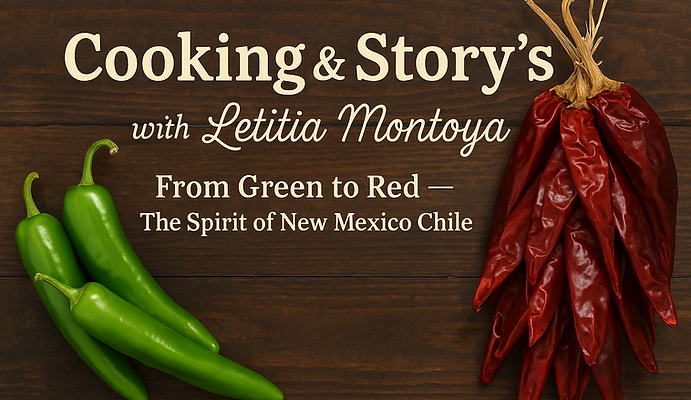
Video's will be coming soon!
💚❤️ Cooking & Story’s with Letitia Montoya 🌶️
What’s on My Mind:
New Mexico chile isn’t just food — it’s our history, our pride, and our heartbeat. From the smoky fields of Chimayó to the warm sun of Hatch, every chile tells a story about who we are and where we come from.
As I cook, I think about my grandmother roasting chile on the stove, the smell filling the house, and how those moments taught me more than any classroom ever could — they taught me love, patience, and tradition.
Today, I want to remind everyone: our roots are powerful. Our culture is alive. And every time we cook, share, and pass down these traditions, we keep New Mexico’s spirit burning bright.
Whether it’s green, red, or Christmas — it’s all family, it’s all love, and it’s all us. 🌶️💚❤️


.png)